

A look at Vegans in sport and why they have made the switch to plant-based diets
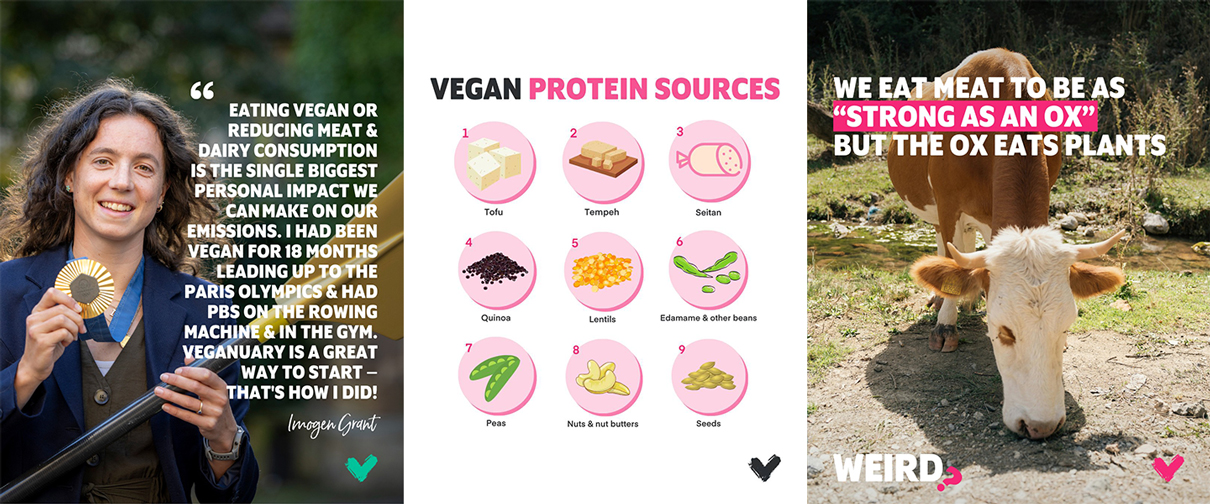
One of the campaign posters for Veganuary this year highlights the fact that although people have traditionally eaten meat to be ‘as strong as an Ox’ – the Ox eats plants? This is something that has not escaped many of the worlds top athletes, so let’s take a look at why many of them have chosen to go ‘plant- based.’
It is finally becoming common knowledge that you don’t ‘need’ meat or dairy products in your diet to build and maintain muscle mass. While there are those that will remain convinced that animal protein is somehow essential to growth and to good health, this myth has now been widely debunked, not just by scientific study but also by the increasing number of high-profile athletes that have adopted a plant-based diet, and subsequently gone on to either maintain a successful career or even surpass their achievements from before they made the switch to a vegan diet.
What is less well known is quite how wide reaching is the range of sports where vegan athletes successfully compete. Today, vegan competitors can be found in almost any sport that you can think of, often at the very tops of their respective fields. It would probably surprise a lot of people to know that there are top vegan ultra-athletes, powerlifters and boxers, as well as the famous celebrities we all know like multiple Wimbledon champion Novak Djokovic and Formula One legend Lewis Hamilton.
Many of these athletes have made publicly promoting a vegan lifestyle part of their mission via the media and through their blogs and books, but business entrepreneurs themselves, with their own vegan brands.
Although animal welfare and dietary restrictions are the reason why some have become vegan, what is remarkable is how many of them report better energy, power and stamina levels, and even mental focus as a result of adopting their vegan diet. It is notable that the legendary sprinter Carl Lewis, who was for a long time the fastest man in the world, famously had his best year ever as a track athlete in 1990, the year he adopted a vegan diet.
So, you may ask the question, how are all of these athletes getting the important levels of protein that they need to perform at such a high level, when many athletes of the past have relied upon getting protein from steak, chicken, milk, eggs, or whey protein supplements? The answer is that these vegan athletes are eating lower on the food chain and getting their protein from healthy plant-based sources which are naturally more nutrient dense than meat, fish or dairy sources. Proof that if it is done right, a vegan diet can give you all you need, and crucially, less of what you really don’t need (such as some animal fats).
Over the last couple of years there has been discussion in the mainstream media about the reputed dangers of a vegan diet due to high levels of meat substitutes that are being consumed, some of which are highly processed and full of additives. Of course, you can eat a bad vegan diet full of processed and fast foods, and junk, and low in vitamins and essential nutrients, but then living on nothing but processed foods and fast food, whether plant-based or not, is obviously not a good idea for your health. It is a sad fact that many food companies have jumped into the vegan market with products that are packed full of ultra-processed fats that are potentially harmful in large quantities, but more responsibly made vegan foods are also available, and have always been around, often made by small artisan companies who are very careful about the ingredients they select, and well aware of what is healthy and what is not.
The athletes that have adopted vegan diets are a clear demonstration of what can be achieved by adopting a plant-based diet, both physically and mentally. Obviously, the world class dieticians and trainers supervising the regimens of these sportspeople know what a good vegan diet is.
A ‘good’ vegan diet that contains legumes, tofu, tempeh, nuts, seeds and an abundance of plants and grains, alongside a wide range of vitamins, minerals, essential fatty acids and antioxidants, should provide all the protein you need and is one of the healthiest you can adopt. The media picture of a highly processed vegan diet being dangerous to the nation’s health is surely better framed as saying simply that a diet full of ultra-processed foods is not good for the nation’s health, full stop.
So in conclusion, while it may be true that there are many more less healthy plant-based foods on the market than there used to be, there are also many more options to fill your cupboards, fridge and freezer with perfectly healthy vegan choices. While there are meat substitutes and vegan cheeses that do contain undesirable ingredients, there are plenty that don’t, and it must be acknowledged that some of the more heavily ultra-processed vegan foods on the market are coming from the same big food industry giants that have made the meat or dairy based junk that lines the shelves of supermarkets.
Many of the small artisan brands that we carry in Greenlife for example, are led by passionate people who care deeply about making a quality product that is healthy, as well as one that might give them a healthy profit. Many of the vegan producers we meet are pioneers that are driven by a desire to produce something that is ethical, cruelty free and sustainable as well as tasty. It must also be acknowledged that some of the more processed plant-based foods out there are not really that dangerous in moderation, but you should no more live on fatty vegan cheese on toast than on dairy cheese on toast.
In fact, a good vegan diet is not only valued by tennis players, formula one drivers and footballers, some of the world’s top ‘ultra-athletes,’ arguably the fittest people on the entire planet, have achieved the borderline impossible on a plant-based diet. So, lets take a look at a few of these athletes, and what they have to say about being vegan:

Tennis
Novak Djokovic
Perhaps one of the most famous vegan athletes in the world is multiple time Wimbledon champion tennis player Novak Djokovic. Djokovic follows a plant-based diet for optimal performance, and at 37 years old, when he should be at the end of his career, he is still at the top of the sport.
Djokovic’s adoption of a plant-based diet started in 2010 when his nutritionist discovered that he had an intolerance to gluten, and suggested at that time that he cut both gluten and dairy from his diet. He credits his diet as playing a role in his great performance and recovery time, and most importantly, consistent energy levels:
“As an athlete, the most important thing is to keep your energy levels consistent – especially as a tennis player, where you’re alone on the course for a best of five match. When playing for 3, 4, 5 hours straight, you need the right fuel… and for me, that right fuel is plant based.”
However, in addition, he made it very clear during a press conference that for him the vegan lifestyle was important for ethical reasons:
“It’s more than a performance reason for me, it’s a lifestyle, it’s something I’m really proud of…it’s a lifestyle more than just a diet because you have ethical reasons as well, being conscious of what is happening in the animal world…the slaughtering of animals and farming and everything, that’s obviously also a huge impact on climate change which maybe people don’t talk about as much.”
Venus Williams
Venus Williams, one half of the successful sister tennis duo, has been fuelled by plants since 2011, and has even inspired her sister Serena to adopt a plant-based diet during her tours. Now she fuels herself with meals such as oats with strawberries, toasted Ezekiel bread, and brown rice with hemp and chia seeds. Venus went plant-based after being diagnosed with Sjogren’s Syndrome, an autoimmune disease that causes joint pain. She was advised to try a plant-based diet to reduce inflammation and hasn’t looked back since, continuing to play tennis at a high level and managing her condition without any medication whatsoever. Although she calls herself a chegan (cheating vegan) and very occasionally breaks with the diet, she is an outspoken advocate of plant-based living. She has credited veganism for her healthy, glowing skin, as well as for the impact it has had on reducing inflammation caused by her disease. She often offers advice to other athletes about replacing meat protein in their diet, and has even launched her own brand of vegan protein powders. Speaking to Health Magazine she explained what vegan means to her:
“Once I started, I fell in love with the concept of fuelling your body in the best way possible Not only does it help me on the court, but I feel like I’m doing the right thing for me.”
Martina Navratilova
Martina Navratilova is one of the greatest tennis players to have ever lived, and regarded as no. 3 in the list of best female tennis players of all time. And she did it all without eating animals. For Navratilova, being vegan is more than just a dietary choice—it is part of a comprehensive approach to wellness that encompasses every aspect of her life, and includes a holistic approach to her own well-being.
One of the leading tennis stars of the 1970’s and 1980’s, she watched everything she put into her body and credits her vegan diet as contributing to her incredible longevity on the tennis court (in all, she won 18 Grand Slam singles titles, 31 Grand Slam women’s doubles championships and 10 Grand Slam mixed doubles). Navratilova retired from singles play in 1994, but continued to play in doubles matches. In 2003, she won the mixed doubles championship at Wimbledon. Three years later, she repeated the accomplishment with a win at the U.S. Open.
Nick Kyrgios
The Australian tennis star Nick Kyrgios has won seven ATP Singles titles, and reached eleven finals, most notably at Wimbledon in 2022 and the 2017 Cincinnati Masters. In doubles, Kyrgios has achieved a career-high ranking of world No. 11 in November 2022, after winning a major doubles title at the 2022 Australian Open and reaching the semifinals of the Miami Open. Kyrgios was inspired to go vegan after the devastating bush fires that ravaged Australia in 2020, which killed over half a billion animals. In a blog post he said of going vegan:
“That’s not for my health, I just don’t believe in eating animals…seeing the footage of these animals suffering with the fires only reinforces why I’ve chosen this diet. When I see these terrible photos, I can’t comprehend eating meat.”

Cricket
Kane Richardson
Australian cricketer Kane Richardson initially went vegetarian in 2014, then finally cut out all animal products from his diet in 2016 after watching documentaries on the meat and dairy industries. Many of the sportspeople on this list initially turned to a plant-based diet to help them achieve better performance goals, but for Richardson his motivation was to alleviate animal suffering, and in fact he didn’t care if his performance was negatively impacted by going vegan.
He told a BBC reporter “I never really thought about if it would impact my cricket because I didn’t care to be honest…It’s my job but there’s bigger things out there in life. I thought ‘I’ll make do – if my body changes, I’ll figure it out’. For me it wasn’t a performance thing.”
Richardson’s diet includes lots of tofu and legumes to ensure that he gets the levels of protein he needs.
Mady Villiers
Mady Villiers is an English cricketer who plays for Essex, Sunrisers and Oval Invincibles as a right-arm off break bowler. In July 2019, she was named in England’s squad for the Women’s Twenty20 International fixtures of the 2019 Women’s Ashes series. It was in 2019 that she went vegan, after watching a lecture on veganism that revealed information about the meat and dairy industries that shocked her.
She has commented that becoming vegan has not impacted on her game at all, apart from the fact that she feels “a lot more refreshed”. She also noticed, alongside many other athletes, that her recovery rate seems to have improved. She has stated that “I recover a lot quicker; I didn’t expect these benefits to happen.”

Basketball
Chris Paul
In 2019, NBA Basketball player Chris Paul hit a career low. He had been an executive producer for a documentary about plant-based diets for athletes called The Game Changers, so he decided to try a plant-based diet himself. Paul went on to turn his career around, leading the Phoenix Suns to the NBA Finals in 2021. He has credited his plant-based diet for reducing inflammation and muscle pain, and says he has increased energy levels, better mood and above all improved recovery. In an interview with GQ magazine, he stated that going vegan was a good lifestyle change for him:
“Years ago, I probably wouldn’t have even gone outside to run around with my kids and all the other activities because my body would be aching.”
Paul is now an investor and ambassador for Beyond Meat, but his diet always includes a wide range of vegetables and protein-packed foods, and he says that a plant-based diet has helped him to vary his diet a lot more:
“The biggest thing when I went plant-based is it opened me up to the diversity of foods that you can have.”
Kyrie Irving
Widely regarded in Basketball as one of the best ball handlers of all time, Kyrie Irving now plays for the Dallas Mavericks, but has played for the Cleveland Cavaliers, Boston Celtics and the Brooklyn Nets. He is an eight-time All-Star and three-time member of the All-NBA team.
Kyrie Irving is another investor and brand ambassador for plant-based meat company Beyond Meat. He turned plant-based in 2017 after watching the documentary What The Health. Like Chris Paul he has credited going vegan with improving his performance on court, giving him increased energy and better recovery too. He has also found that being plant-based has improved his mood.
Deandre Jordan
Deandre Jordan is another NBA player who plays for the Denver Nuggets. He started with the Los Angeles Clippers before moving to the Dallas Mavericks after ten seasons. He has played with the New York Knicks, Brooklyn Nets, Los Angeles Lakers and the Philadelphia 76ers.
Jordan went vegan in 2018 for environmental reasons. He has hosted a vegan cooking show in the U.S. called Cooking Clean. Yet another investor and ambassador for Beyond Meat, he was also recruited to be an ambassador for Eat Just, the company behind JUST Egg. An outspoken advocate of a vegan lifestyle he is also passionate about environmental issues, and has spearheaded an initiative to combat environmental damage by planting trees called Plant with DeAndre.
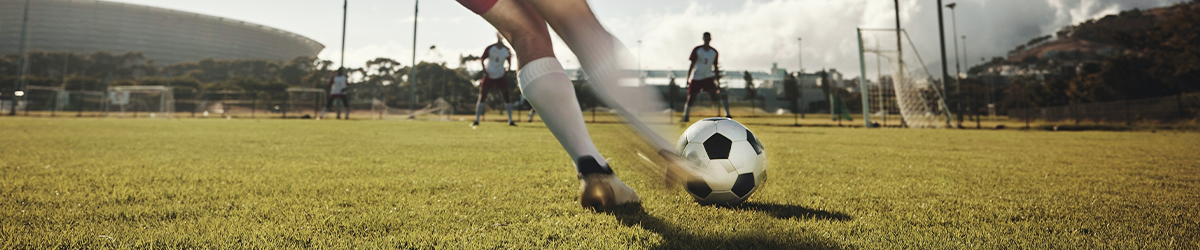
Football
Chris Smalling
Roma defender Chris Smalling explained in an interview with The Telegraph that, in common with many footballers, he suffered from tendinitis a lot, so he started to cut red meat out of his diet, which started him on his road to veganism:
“Red meat causes a lot of that inflammation and when I was cutting that down, the tendinitis started to go. It used to be a problem in terms of warm-ups, because getting going was a bit of a nightmare. My tendinitis has got better and better.”
His wife was already vegan, so he had started to eat more and more vegan meals at home, but the benefits he found to his injury rate, recovery and performance led to him first cutting out red meat, then eventually all meat from his diet, before finally going completely vegan. Discussing the impact that his new vegan diet had on his match performance, he has explained:
“Normally the second day after a game would be the worst. I would feel very tired, but I felt like I was recovering very quickly. In terms of the vegan diet there were a lot of factors that helped with that and I was able to keep banging out games without being too sore.”
Héctor Bellerín
Arsenal defender Héctor Bellerín is another footballer who has been very vocal about the benefits he has enjoyed from following a plant-based diet. Like many athletes mentioned in this article, he was initially curious to see how it impacted his performance, but soon found himself sticking with it after he noticed his recovery time improving. In an interview with The Players’ Tribune:
“At first, it was all about trying it. How it tastes, how it feels, and how it helps, but I think it does way more than that, and now I see myself totally dependent on this particular diet…For me the most important thing is that inflammation in my body after games and the speed that my body recovers compared to before. I’ve always had little problems in my ankles when I played very hard games, they’d get very inflamed and stiff…Now I don’t even have to strap them to play anymore. It doesn’t just make a difference in your body but I strongly believe that with what we’re doing to the earth [it’s] paying back the earth too.”
Alex Morgan
US Women’s National Soccer Team star Alex Morgan, who is a FIFA Women’s World Cup champion and an Olympic gold medallist, stopped eating meat in 2017, mainly due to ethical concerns about American factory farming.
After cutting out meat she gradually transitioned to an entirely plant-based diet. As she did so, she started to see numerous health benefits, including improvements in endurance and training and lowered cholesterol levels. She includes many anti-inflammatory foods like berries, sweet potatoes and lots of leafy greens in her diet, and says that going plant-based has helped her to become less injury-prone on the field:
“I never thought it was possible I could be playing at an elite level as a professional athlete with a plant-based diet. Then I realised it wasn’t detrimental at all.
Morgan has become a vocal advocate of a plant-based diet for peak athletic performance, but is also very passionate about animal rights as well:
“I am passionate about giving animals a voice. I adopted a vegan diet because it didn’t feel fair to have a dog I adore and yet eat meat all the time.”
Jermain Defoe
Although now retired from playing, famous striker Jermain Defoe adopted a vegan diet to give him increased energy so that he could prolong his career. Defoe scored over 150 goals in his career, in which he played for England as well as for numerous premier league teams. In an interview with Men’s Health in 2017 he reported that he gave a vegan diet a try after his girlfriend suggested it. When asked if he found it hard to give up meat and eggs he quipped:
“I don’t find anything hard to give up, as such, because I know the feeling scoring goals gives me.”
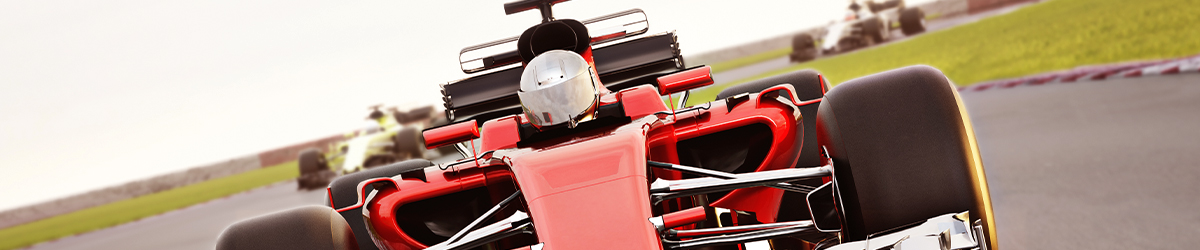
Formula One Racing
Lewis Hamilton
Formula One legend Lewis Hamilton must be one of the most globally famous vegan athletes. He is an outspoken supporter of animal rights, having made the plant-based switch in 2017 after watching the Netflix documentary What the Health, although he has claimed in interviews that he was already on the path to veganism at this time. He credits his vegan diet as the reason for his sporting success and changing his energy levels for the better. In an interview with Men’s Health magazine, he explained:
“I have more energy; I’m so much more productive. I wake up feeling way better, clearer in thought and fresher in my body…I recover quicker; I sleep better. My skin cleared up. I have fewer allergies. There are just so many impacts…I’m physically in better shape than I’ve ever been, and I’m more successful than ever right now, and my plant-based programme has played such a big role in that.”
Now a committed vegan, Hamilton owns his own chain of vegan fast-food restaurants, Neat Burger, and has stated that his only regret is not choosing to try it sooner.
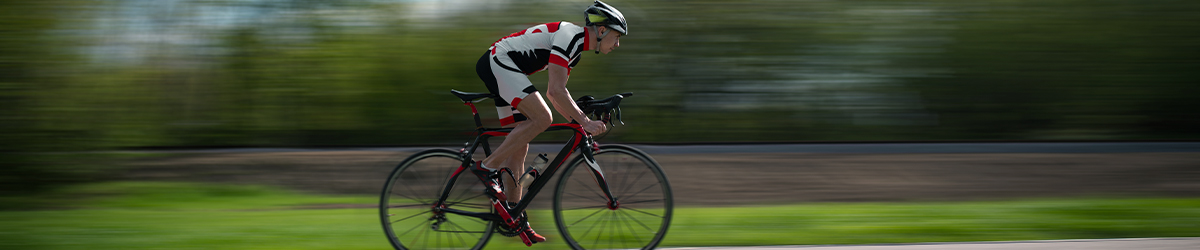
Cycling
Dotsie Bausch
American Speed cyclist and Olympic silver medalist Dotsie Bausch achieved eight US national championships, two Pan American gold medals and a world record throughout her career. In an interview with the OMD (One Meal A Day) movement, an organisation that campaigns to get people to just swap one meal a day for an entirely plant-based meal in aid of the climate, she has admitted that before switching to a vegan diet she was worried that it would impact negatively on her performance, but the opposite was true:
“I felt like it became my secret weapon…I could breathe better during training and literally ride circles around my teammates who were many years my junior…What’s more, my recovery time decreased immensely. I didn’t have to spend nearly as much time resting from the gruelling workouts as I used to, which meant I could train more often and get stronger, faster.”
After retiring from competitive sport, Bausch founded Switch4Good – a non-profit organisation dedicated to ‘rattling accepted norms around dairy and health.’

Surfing
Tia Blanco
Vegan surfer Tia Blanco was brough up a vegetarian but made the switch to a purely plant-based diet in 2013. Three years later in 2016 she became the first surfer to win back-to-back gold medals post-1996 at the World Surfing Championships aged just 19.
In an interview with Men’s Journal, she explained that:
“After doing my research, I chose to go vegan.”
Part of that research, and one of the reasons she made the decision to go vegan, was reading the book The China Study, by T Collin Campbell & Thomas M. Campbell II, which advocates a plant-based wholefood diet. One of America’s best-selling books about nutrition, The China Study, which was published in 2005, is loosely based on a 20 year study into the links between diet and chronic illness.
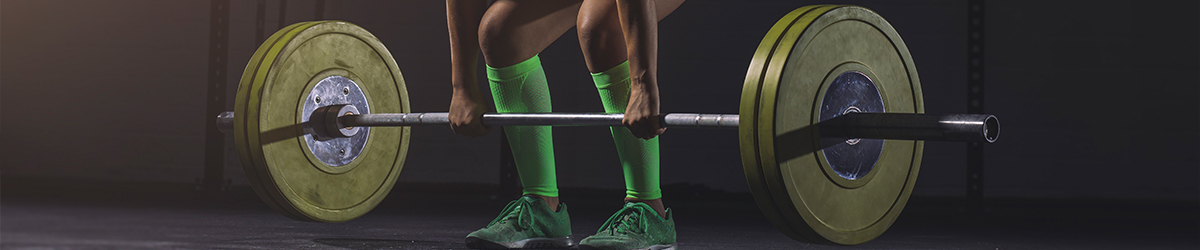
Powerlifting (Weight Lifting)
Patrik Bouboumian
The pale, skinny vegan used to be a pretty familiar stereotype, but if ever there was an athlete to dispel this image, it is 2012 European Powerlifting Champion Patrik Bouboumian. In 2011 Bouboumian became the first ever vegan to be awarded the title of Germany’s strongest man. He has become famous in the vegan community for his appearance in the 2018 Documentary The Game Changers, where his plant-based diet and training regime are documented. The film features interviews with Scott Stoll, a physician for the US Olympic team, who argues that that animal-based protein impedes recovery and athletic performance due to certain inflammatory molecules and mediators, where as a plant-based proteins promotes gut microbial diversity, reduces inflammation and optimises both recovery and athletic performance. In 2013, Bouboumian told his followers:
“This is a message to all those out there who think that you need animal products to be fit and strong. Almost two years after becoming vegan I am stronger than ever before and I am still improving day by day…Don’t listen to those self-proclaimed nutrition gurus and the supplement industry trying to tell you that you need meat, eggs and dairy to get enough protein…There are plenty of plant-based protein sources and your body is going to thank you for stopping feeding it with dead food. Go vegan and feel the power!”
Sophia Ellis
Female powerlifter Sophia Ellis she won the British National Championships in April 2022, breaking 6 British records and lifting the heaviest deadlift in British powerlifting history (237.5kg), to progress to the World Classic Championships in South Africa. She went on to break the European deadlift record of 240.5kg at the European Championships in Poland 2022. Ellis had struggled to overcome eating disorders before embarking on her powerlifting career, and she initially switched to a vegan diet due to health reasons. In an interview with Female First she revealed how it impacted on her:
“To start with, it was due to health reasons; I’m lactose intolerant and wanted to start reducing my meat consumption. But the more I looked into veganism, the more my eyes opened to the ethical and environmental side of this lifestyle – which completely sold it to me. Once I made the switch, I found that my body really thrived off it! I also became more conscious of what I was putting into my body and how small changes in my lifestyle could have a big impact.”
When asked about her diet, and how she managed her protein intake, she explained:
“There are plenty of plant-based proteins out there, and I aim to get protein from multiple different sources to maintain a well-balanced diet. The ones I tend to eat the most are seitan, tofu, tempeh, alternative meats/soy products and vegan protein shakes for convenience.”
She has been honest in confessing that she has no ‘pre-vegan’ powerlifting career to compare with how she feels now, but is convinced that it is best for her:
“I didn’t powerlift before I went vegan. But for me personally I thrive off of plant-based living. I feel more energised and fuelled for training. What I do know for sure though, is that you can be strong and vegan!”

Boxing
Canelo Álvarez
While it appears that Mexican boxer Canelo Álvarez is no longer on a strictly vegan diet, he has adhered to one on a couple of famous occasions. He made world headlines when he announced his transition to a vegan diet in preparation for his 2019 fight against Daniel Jacobs, a decision that came as a surprise considering his previous comments about enjoying a traditional, meat heavy, Mexican diet.
By adopting a plant-based diet, Canelo believed he could enhance his agility and speed. He enlisted nutritionists to make sure that he was getting all of the protein and nutrients he needed, and his diet was focussed on a high intake plant-based proteins, such as chickpeas, lentils, black beans, tofu, and quinoa plus nutrient rich fruits, vegetables, and whole grains. He backed this diet up with a vitamin B12 supplement, and closely monitored his iron levels, making sure to get plenty of plant-based sources of iron such as dark leafy greens as well as lentils and tofu on his plate. He won the fight by unanimous decision, and exhibited great stamina and agility

Mixed Martial Arts (MMA)
Nick Diaz
Top MMA fighter Nick Diaz is a former Strikeforce, WEC and IFC welterweight champion and UFC title challenger. He also competed in PRIDE, EliteXC, DREAM and Shooto. During their careers, Nick and his brother Nate (also an MMA fighter) were both vegan. Currently retired from competition, they both now teach Jiu-jitsu in California. He stated that he thought his plant-based diet made him a more intelligent fighter, boosted his stamina and aided his post-fight recovery. He has stated that he has mostly shunned animal products since he was 18, and according to a tweet when he did try to switch back to meat, he felt ill.
Sprinting
Morgan Mitchell
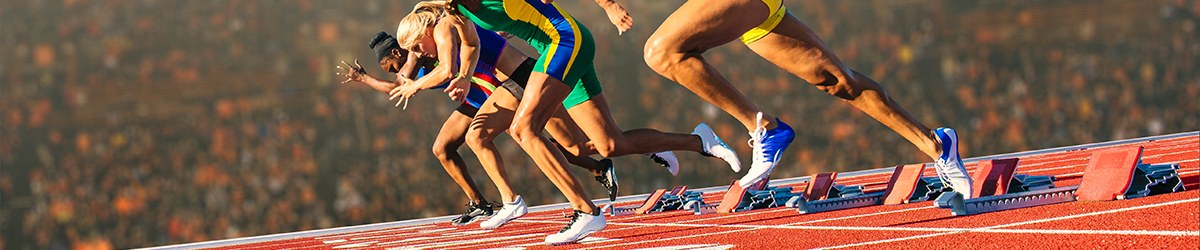
As mentioned in the introduction, Carl Lewis turned vegan in 1990, during his late twenties, and credited his outstanding 1991 results in part to his vegan diet. Sprinter Morgan Mitchell, who appeared in the documentary The Game Changers alongside Dotsie Bauch and Scott Jurek, was just 21 when she competed in the 2016 Olympics in Rio, two years after switching to a plant-based diet. She was asked by Great Vegan Athletes what her teammates thought of her plant-based diet and replied that the fact that she was getting personal best after personal best meant that nobody could really question her! However, for her, eating vegan isn’t just about the health benefits or her sporting career:
“People often ask me ‘What if the vegan diet fails and you start running slower?’, ‘Will you ever eat meat again?’ or ‘Don’t you miss meat?’…I just have to reiterate the fact that the life of an animal and the wellbeing of the environment means more to me than any amount of money or the career path I wish to take because without them we wouldn’t have life.”
Marathon Running
Fiona Oakes
Fiona Oakes is a British distance runner who has been vegan since she was 6 years old, unlike many of the athletes listed in this article that adopted a plant-based diet later in their life or career. In 2013, she won the Antarctic Ice Marathon and the North Pole Marathon. And she has completed the Marathon des Sables three times.
She holds four world records for marathon running. In 2013 she became the fastest female in aggregate time to complete a marathon on each continent, the fastest female in aggregate time to complete a marathon on each continent and the North Pole and the fastest female in elapsed time to complete a marathon on each continent and the North Pole. In 2018, in Norway, she achieved her 4th Guinness World record by becoming the fastest female to run a half marathon in an animal costume – dressed as a cow!
A committed vegan, she is an ambassador for The Vegan Society in the UK, a patron of the Captive Animals Protection Society, and also runs her own Animal Sanctuary, where she cares for around 400 animals. In terms of her diet, she follows a wholefood diet that provides plenty of wholegrains, nuts, nut butters, rice, pasta, fruit, vegetables, and bread.
Triathlon, Duathlon and Ultra Athletics
Lisa Gawthorne
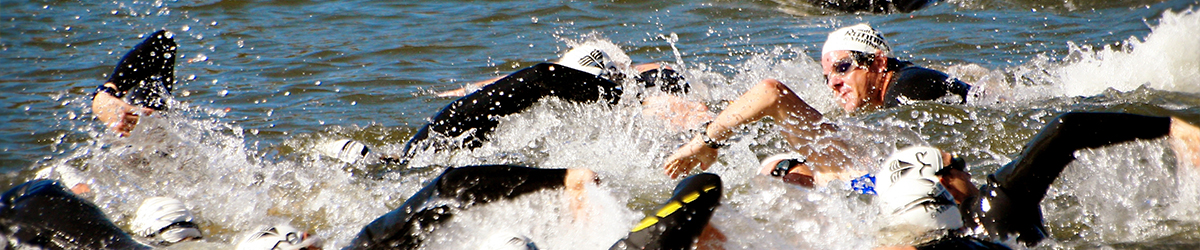
Lisa Gawthorne is a British athlete, author, and vegan entrepreneur who has won numerous medals in triathlons and duathlons throughout a long career. She has been vegan for a staggering 21 years and stated to Vegan Food & Living that she was vegetarian from the age of six “after making the connection between meat and animals from a PETA leaflet.” Since that time, she knew she would go vegan and finally went completely plant-based in 2003.
“I am very vocal about being vegan for the animals as I strongly believe they are not here to be used by humans for clothing or food…The fact it has positive benefits on my health is of course an added bonus.”
Gawthorne credits her plant-based diet for much of her sporting success, and since going vegan she has enjoyed better sleep, energy and faster recovery times. She has become a fierce advocate of vegan ethics and wears vegan-related logos on her sports kit, such as The Vegan Society, PETA, and Veganuary. Alongside her sporting endeavours, she runs a vegan food company Bravura Foods and is the author of a vegan fitness book Gone in 60 Minutes.
“I am all about spreading the positive vibes associated with veganism, and in particular its beneficial effects in sport and overall athletic performance…It’s been an absolute joy to see how many of my GB team pals, and teammates from other countries who have decided to go vegan over the years, and have either reached out for advice or mentioned that I inspired their choice. This always makes me beyond proud.”
In 2023, just two months after winning the European Duathlon Championships in Italy, Gawthorne, then aged 41, won the gold medal for her age group at the 2023 World Triathlon Multisport Championships in Ibiza. She not only won, but was a full minute and six seconds ahead of the runner up.
Rich Roll
Rich Roll is a vegan ultra-endurance athlete and full-time wellness & plant-based nutrition advocate, popular public speaker. His story is truly remarkable, and his journey to veganism is awe inspiring.
In the late 1980s, while at Stanford University, Roll had competed as a swimmer, but he regrettably found himself struggling with an addiction to drugs and alcohol, leading to jail time and driving a wedge between various family relationships that lasted for several years, ultimately ending up in rehab at the age of 31. Following rehab, he adopted a poor diet and gradually gained weight until in 2006, on the eve of his 40th birthday, he was so unfit that he struggled to get up a flight of stairs. Now 50lbs overweight, and reeling from the discomfort of climbing the stairs, he had something of an epiphany. Realising thart he could suffer from a heart attack at any time, he decided to change his lifestyle.
The next day he overhauled his diet, became a vegan and started to run and swim once again. Just two years later, he began clocking top finishes at Ultraman World Championships and leading a community of others looking to transform their lives.
Competing in the 2008 Ultraman World Chamionships in Hawaii, he surprised the triathlon & ultra communities by not only becoming the first vegan to complete the 320-mile über-endurance event, but by finishing in the top 10 males! In fact, he finished with the 2nd fastest swim split — all despite having never previously completed even a half-ironman distance triathlon! He was also a top finisher in the same event a year later. To appreciate quite how remarkable these achievements are, it is worth noting that the Ultraman World Championship event is widely regarded as one of world’s most gruelling endurance races. This double-ironman Day 1 involves a 6.2 mile ocean swim immediately followed by a 90 mile cross-country cycling race. Day 2 is a 170 mile cycling race. And the event culminates on Day 3 with a 52 mile double marathon run on the searing hot lava fields of the Kona coast.
The incredible story of Rich Roll doesn’t stop there. In May 2010, he teamed up with another ultra-endurance athlete Jason Lester to embark on a new challenge of their own invention, and one that many thought was frankly impossible. Together, Roll and Lester successfully completed their ‘Epic 5 Challenge.’ This entailed completing 5 ironman-distance triathlons on 5 islands of Hawaii in under a week.
Rich Roll has continued to remain an inspiration to millions, and now, in his fifties, continues to promote plant-based living in his popular podcast and several bestselling books, ‘Finding Ultra, The Plantpower Way’, vegan recipe book ‘The Plantpower Way: Italia’, and ‘Voicing Change’.
Scott Jurek
Utrarunner Scott Jurek credits many of his successes as a runner to his decision to become vegan in 1999. After going vegan, Jurek went on to become a four-time winner of UltraRunning Magazine’s Ultrarunner of the Year and Men’s health 100 fittest Men of All Time. His accomplishments include: 7 x consecutive winner of the Western States 100 Mile Endurance Run (1999-2005), 2 x winner of the 135 mile Badwater Ultramarathon (2005-2006), Appalachian Trail Speed Record (46 days, 8 hours, and 7 minutes in 2015) and US Record for 24-hour road run (a staggering 165.7 miles in 2010).
Jurek has taken first place at least once in almost all of the world’s most high-profile ultrarunning events. During his long months of training, he makes sure to include lots of protein rich legumes and grains into his diet, and during races he uses carbohydrate dense gels and chews.
Talking to ‘No Meat Athlete’ Jurek explained about his plant-based diet:
“A lot of people assume that one needs to eat animal products to gain a lot of muscle mass or sufficient muscle mass for even power sports, and that’s definitely been proved false time and time again.”
Yassine Diboun
Like many people, endurance runner Yassine Diboun became a vegan after watching Ron Mann’s documentary “Go Further” which starred actor and vegan activist Woody Harrelson and featured other celebrities such as singers Natalie Merchant, Michael Franti and Anthony Kiedis and author and essayist Ken Kesey. The documentary, which features a group of environmental activists riding around Route 101 in a bio-fueled buss in America speaking and campaigning about environmental change, educated many people about the benefits of going vegan for the health of the planet, as well as debunking many popular myths about veganism.
Since making the switch to a plant-based diet, Diboun believes he is faster and stronger. Since going vegan in 2008, he has frequently finished in the top of his events. He places in the top of some of the most challenging ultramarathons, not only in America but around the world, such as the Western States Endurance Race (2013), and Hurt 100 in Hawai (he finished in 3rd place in 2016). He took the speed record for the 453-mile Oregon Crossing in 2016.
Diboune continually mixes up his meals and frequently combines a multitude of fruits and vegetables for nutrient dense smoothies and snacks. He normally starts his day with oats and frequently includes beans, legumes, and whole grains to get the protein he needs. He tries to follow his cravings and to ‘listen to his body’- continually adding new foods to his diet.
Catra Corbett
Like Rich Roll, ultramarathon runner Catra Corbett has overcome major personal struggles with alcohol and drug addiction before becoming an endurance athlete career and adopting a plant-based diet. Remarkably, this former meth addict has completed more than 250 ultramarathons. Her many accomplishments include being Overall Winner of Razorback 100 (2013), Overall Record Holder of John Muir Trail double (424 miles in 12 days, 4 hours, and 57 minutes) and being one of the few athletes on the planet to have competed in over one hundred 100 mile races. Corbett credits a plant-based diet with improving her recovery times and has stated that she no longer has low points in her energy levels or suffers from extreme tiredness at night.
After feeling some negative effects from a high carbohydrate diet, when not racing Corbett now adopts a low carb vegan Keto diet, which suits her best, and she believes that everyone should follow the specific diet that works for them. With 50 ultramarathon podium finishes to her name, this appears to be a vegan one for her!


Oh my goodness! Awesome article dude! Thank you soo much
Hurrah, that’s what I was searching for, what a information! existing
here at this wweb site, thanks admin of this site. http://Boyarka-Inform.com/