Summer has officially arrived, and here at Greenlife, customers are flocking in to stock up on sun care products.
A question we are often asked is:
“Which sunscreens are the safest for my family but still provide adequate protection?”
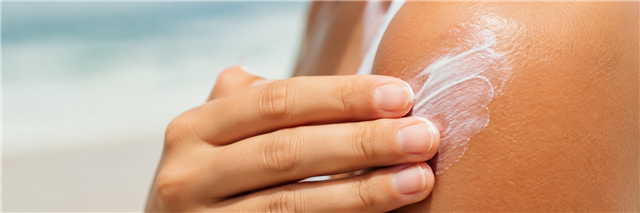
To answer this fully we need to take a look at some of the ingredients used in many sunscreens and why you may prefer to avoid them.
Chemical filters
Many popular brands employ chemical filters such as oxybenzone, octinoxate, octocrylene or avobenzone which absorb the rays before they can reach your skin. They are easy to apply, cheaper, widely available and very effective for preventing sunburn.
However, whilst they have been deemed safe by regulatory agencies, there are emerging concerns that these chemicals are being absorbed into the bloodstream where they may become endocrine disruptors in high enough concentrations. Recent research confirms detectable levels of some sunscreen chemicals in blood serum within hours of application.
These same chemicals have also been traced in breast milk and urine samples suggesting certain sunscreen ingredients are systemically absorbed. Whilst current evidence reassures us that concentrations found remain within safety thresholds, it does beg the question what undesirable effects may emerge in decades to come.
Another worrying finding is the presence of benzene (linked to cancer with prolonged exposure) in some sunscreens tested, particularly those with an aerosol spray.
Thankfully there are several other chemical filters which are far safer
With names such as “Diethylhexyl Butamido Triazone” and “Diethylamino Hydroxybenzoyl Hexyl Benzoate” they sound just as alarming but are harmless and still effective as UV filters. Due to their larger molecular structure they stay on the surface of the skin with extremely minimal absorption. They are less widely used as they are more expensive to produce and require more frequent application but are the ingredient of choice for the conscious shopper.
Mineral protection
The second type of sunscreens utilise a mineral layer that blocks UV light by physically reflecting it. These mineral bases use zinc oxide or titanium dioxide which sit safely on top of the skin and extensive testing shows they do not penetrate the outermost layer.
What about marine life?
Unfortunately the same chemicals which can show up in our bodies can be harmful to marine life, with fish and mammals exposed to prolonged sunscreen chemicals suffering endocrine disruption and reduced fertility. Sunscreen pollutants have caused extensive bleaching and DNA damage to coral reefs, leading oxybenzone and octinoxate to be banned in some parts of the world.

So which brands are safest?
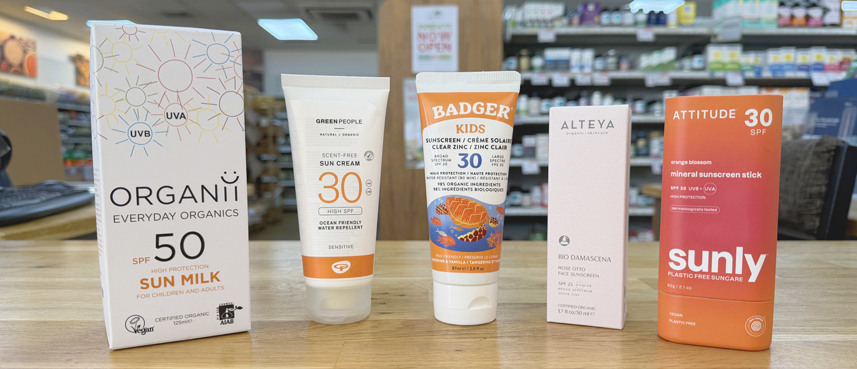
At Greenlife we look for the brands with the safest ingredients possible for our customers and the environment.
Some of the highest factor sunscreens we sell use a combination of predominantly mineral blocks and the most benign of the chemical filters along with anti-oxidant rich botanicals such as aloe vera or jojoba to keep skin moisturised and hydrated.
Others are purely mineral based if you prefer that option. Most are labelled as “reef safe” or “ocean friendly”, whilst others are vegan, organic, scent free and all are cruelty free.
We have a large range to meet your requirements, so do pop in to browse our selection and as always if you need any help deciding, just ask one of our knowledgeable staff for assistance.
Take a look at the selection below to find a sunscreen you can trust:
Our Current Offers
We regularly feature selected sun care products in our monthly offers, alongside a wide range of organic food, natural health, household and everyday essentials. As our offers change each month, visit our Special Offers Bulletin to see what is available in store now.